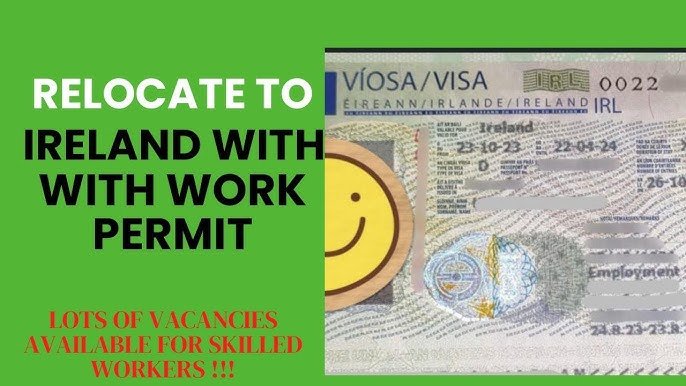
Ireland offers several work permits designed to attract skilled professionals from outside the European Economic Area (EEA), Switzerland, and the UK 🌍.
These permits allow non-EEA nationals to live and work legally in Ireland, helping boost the economy and fill labor shortages across key sectors.
🛂 Types of Irish Work Permits
Ireland mainly offers two popular work permit categories:
1️⃣ 💎 Critical Skills Employment Permit
Designed for highly skilled workers in shortage occupations such as:
🖥️ ICT specialists • 🛠️ Engineers • 🩺 Healthcare professionals
Requirements & Benefits:
- Minimum salary: €38,000–€64,000, depending on the role 💰
- Fast-track to Stamp 4 (permanent residence) after 2 years 🚀
- Eligible for family reunification 👨👩👧
2️⃣ 🟩 General Employment Permit
For roles not included on the Critical Skills list.
Key Requirements:
- Minimum salary: €30,000 per year
- Proof that the employer could not find a suitable EEA/Swiss/UK candidate
- Initial validity: 2 years, extendable up to 5 years 📅
🧾 Application Process
Most applications are submitted by the employer on behalf of the worker.
🔹 Requirements include:
- ✔ A valid job offer
- ✔ Proof of qualifications 🎓
- ✔ Passport copy
- ✔ Signed employment contract
- ✔ Evidence of local recruitment efforts (for General Permits)
🔹 Fees:
- €500–€1,000, depending on permit duration 💶
⏳ Processing Time
- Standard processing: 4–8 weeks
- Critical Skills Permits are prioritized and processed faster ⚡
🟢 Post-Permit Rights
Once your permit is granted, you may:
✨ Legally live and work in Ireland
✨ Bring your immediate family (subject to conditions)
✨ Apply for permanent residence after completing the required stay
🏁 Conclusion
Ireland’s work permit system is designed to attract global talent with a streamlined process, competitive salaries, and a clear pathway to long-term residency.
For skilled workers looking for opportunities in Europe, Ireland remains a top-choice destination 🇮🇪💼✨.